
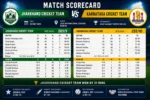
A cricket scorecard tells much more than the final result of a match. sportstatsflow.com helps cricket followers understand scores, player performances, innings details, and the numbers that explain how a game actually unfolded. Some people check only the winning team, while others look closely at batting figures, bowling spells, partnerships, and extras. Knowing how these details fit together makes following cricket more interesting and much easier.
Understanding The Main Scorecard
A cricket scorecard presents the main statistics recorded during a match. It usually shows the teams, total runs, wickets lost, overs completed, and individual player performances. Depending on the competition, it may also include partnerships, fall of wickets, extras, and innings summaries. These details help readers understand the result without watching every ball.
The total score tells readers how many runs a team has made. Wickets show how many batters have been dismissed during the innings. Overs indicate how much bowling has been completed, although the format determines how many overs are available. These figures work together when judging whether a team has scored quickly or struggled.
A scorecard also separates team performance from individual contributions. One batter might score most of the runs, while several teammates contribute smaller totals. A bowler may take important wickets without conceding many runs. Looking at the full scorecard provides a more balanced picture than focusing on one impressive number.
Reading Batting Figures Correctly
The batting section usually lists each batter alongside their runs and dismissal information. It may also display balls faced, boundaries, strike rate, and the method of dismissal. These figures help readers understand both scoring output and the way a batter approached the innings. The exact layout can vary between scorecard providers.
Runs represent the number of runs credited to the batter. Balls faced show how many deliveries the batter encountered, with certain extras handled differently under cricket scoring rules. Fours and sixes indicate boundaries scored by the batter. A player who scores fifty runs from thirty balls has generally scored faster than someone making fifty from seventy balls.
Strike rate gives another useful view of batting speed. In limited overs cricket, it is commonly calculated by dividing runs scored by balls faced and multiplying the result by one hundred. A batter scoring sixty runs from forty balls has a strike rate of 150. This number helps compare scoring pace, although match conditions still matter.
What Bowling Figures Reveal
Bowling figures describe how a bowler performed while trying to restrict the batting side. Common details include overs bowled, maidens, runs conceded, and wickets taken. These numbers show how much pressure the bowler created and how successfully the bowler dismissed opposing batters. They should be read together rather than separately.
A bowling figure such as three wickets for twenty-five runs means the bowler took three wickets while conceding twenty-five runs. This is often written as 3/25 in a compact scorecard. The number of overs bowled adds important context because conceding twenty-five runs in four overs differs from conceding the same total in eight overs.
Economy rate measures the average runs conceded per over. It is generally calculated by dividing runs conceded by overs bowled, with the official calculation following cricket scoring conventions. A low economy rate can indicate effective control, particularly in limited overs matches. However, a bowler taking crucial wickets may still have a valuable performance despite conceding more runs.
Making Sense Of Extras
Extras are runs added to the team’s total that are not credited directly to a batter’s individual score. Common categories include wides, no-balls, byes, and leg-byes. Depending on the rules and scoring situation, penalty runs may also appear. Extras matter because they can influence the final margin in a close match.
A wide is generally called when a delivery falls outside the permitted area for a legitimate ball. A no-ball is called when a delivery breaks a relevant bowling or delivery rule. Both can add runs to the batting team’s total and may create additional consequences under the playing conditions. The exact rules depend on the type of infringement.
Byes and leg-byes are recorded differently from runs scored directly by the batter. Byes occur when the ball passes the batter without making contact with the bat or body and the batters run successfully. Leg-byes involve the ball contacting the batter’s body under conditions that allow those runs. Reading the extras breakdown explains where additional team runs came from.
Overs Wickets And Run Rate
Overs show the number of completed six-ball overs and any additional legal deliveries within the current over. Cricket scorecards often display overs using a decimal-looking format, but the digits after the decimal point represent balls rather than tenths. For example, 17.4 overs means seventeen completed overs and four additional legal balls. It does not mean seventeen point four mathematical overs.
Wickets lost indicate how many batters have been dismissed during the innings. A team with eight wickets down has fewer recognised batting options remaining than a team that has lost only two wickets. However, the remaining players and their abilities still influence the team’s prospects. The wicket count becomes especially important near the end of a limited overs innings.
Run rate describes the average runs scored per over. In a standard calculation, the total runs are divided by the number of overs faced, using the actual completed balls where necessary. A team scoring 180 runs in twenty overs has a run rate of nine. This measure helps readers assess scoring pace and understand chasing requirements.
Following Partnerships And Dismissals
A partnership records the runs added while two batters share the crease between dismissals. Partnerships help explain whether the innings developed through steady cooperation or isolated individual contributions. A large partnership can rebuild an innings after early wickets. It can also accelerate scoring when established batters find gaps and attack effectively.
Scorecards may display each partnership’s total runs and the number of overs it lasted. Some detailed scorecards also separate the contributions made by each batter during that period. This information helps readers identify which players supported the scoring and which players took greater responsibility. Partnership figures are particularly useful when reviewing an innings after the match.
Fall of wickets information shows the score at which each batter was dismissed. It often includes the team total, wicket number, and sometimes the over or batter involved. A team losing three wickets early may face a very different situation from one losing three wickets near the end. These details explain the sequence behind the final total.
Comparing Different Match Formats
Cricket scorecards change slightly according to the match format. Test matches allow multiple innings and can continue across several days, while One Day International matches usually provide each team with a limited number of overs. T20 matches use shorter innings and often place greater emphasis on scoring speed. Understanding the format helps readers interpret the statistics correctly.
In Test cricket, innings totals, bowling workload, and match progress across several days deserve close attention. A batter’s ability to spend time at the crease can matter as much as rapid scoring. Bowlers may aim to create pressure over long spells rather than attack on every delivery. The scorecard therefore reflects a different balance of priorities.
Limited overs scorecards often highlight strike rates, required run rates, and remaining overs. In a chase, the target and current score help readers understand the runs still needed. The number of wickets remaining also affects how aggressively a team can approach the target. Format-specific context makes scorecard comparisons more meaningful.
Checking The Match Result
The result section explains whether a team won, lost, tied, or finished with another officially recorded outcome. Limited overs matches may be decided by runs or wickets, depending on which team batted first and how the chase ended. Test matches can finish with a win, loss, draw, or tie. The wording should be read carefully because each result describes a different situation.
A win by runs usually means the team batting first finished ahead after both sides completed their relevant innings. A win by wickets commonly means the chasing team reached the target before losing all its available wickets. The margin provides additional information about how close the contest became. It does not automatically explain every important moment.
Rain interruptions and revised targets can make certain results more complicated. Some limited overs competitions use a method such as the Duckworth-Lewis-Stern system to adjust targets when playing time is lost. The scorecard or match report may identify the revised target and result method. Checking these details avoids misunderstanding a shortened match.
Conclusion
Cricket scorecards become easier to understand when batting, bowling, extras, partnerships, and match results are considered together. Each statistic answers a different question, so no single number explains the entire performance. Learning the basic terms helps fans compare players and follow match situations with greater confidence. Visit sportstatsflow.com for cricket statistics and match information, and make every scorecard more useful by looking beyond the final total.
Read also :-
